How Not to Injure Yourself While Slinging

Photo by Pixabay on Pexels.com

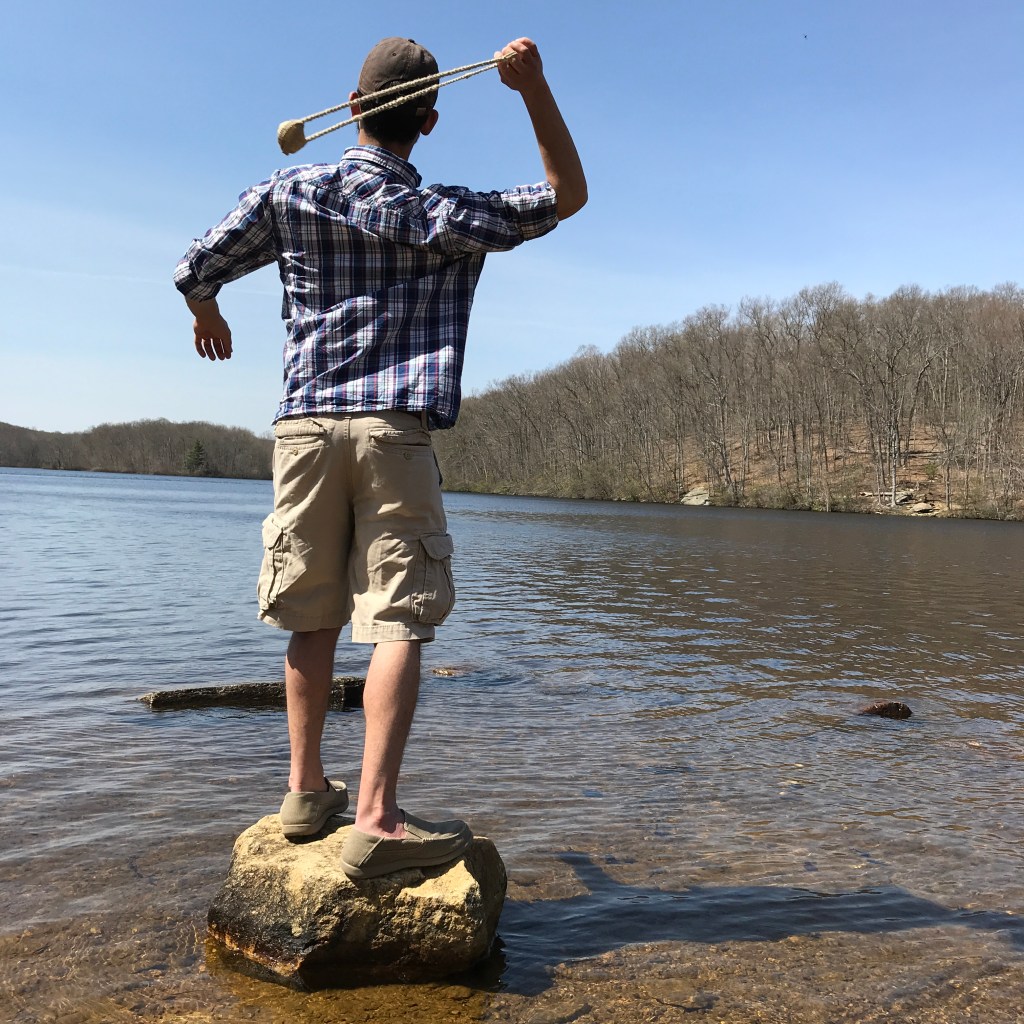
Slinging is an ancient and powerful skill—one that has been used for hunting, warfare, and sport for thousands of years. But let’s be real: if you’re not careful, it can also be a great way to give yourself a black eye or a sore shoulder. In this article, we’ll go over how to sling safely, how to make sure your body is ready for it, and how to avoid the painful mistakes I (and many others) have made over the years.

Slinging can be risky if done recklessly. After all, you’re swinging a rock around your head and releasing it with the force of a handgun. So let’s talk about how to do it safely and keep your body in good shape while doing so.

How Not to Hit Yourself in the Head While Winding Up

First, let’s start with the sling itself. Having the right-sized sling makes all the difference. I always recommend that beginners start with a sling that measures from their thumb to their shoulder. This length provides enough power without sacrificing accuracy or making the sling too unwieldy.

A properly sized sling also makes it nearly impossible to hit yourself during the windup. If your arm is extended behind you, the sling should be clear of your body.

Now, let’s talk about form. If your elbow is bent and your arm is close to your body, there’s a chance that a bad angle could send the sling flying into your head or torso. If you use a bent-arm windup, be sure to keep your swing vertical to avoid accidents.

How to Keep the Rock in the Pouch

Keeping your projectile in the pouch is another key aspect of safe slinging. Losing ammo mid-windup can send it flying unpredictably, which is bad news for you and anyone nearby.

The best way to keep the rock in place is to maintain a consistent speed during the windup. Speed fluctuations cause the retention and release cords to bend or flex, creating jerky movements that can knock the projectile loose.

You’ll also want to keep your sling on a consistent plane of rotation. If your windup is all over the place, not only does it increase the risk of losing the rock, but it also makes accuracy much harder to achieve. Keeping your sling on the same path every time ensures consistency in your throws.

What Happens When the Retention and Release Cords Twist?

Twisted cords are a common issue, and they can cause two major problems:

  1. The ammo won’t stay in the pouch when at rest. If the pouch can’t lie flat because of a twist, your rock may not stay secure.
  2. The ammo may not release properly. If the release cord wraps around the retention cord, it can prevent the sling from opening fully. This means the projectile won’t fly out cleanly—and in some cases, may not leave the sling at all.

A simple way to prevent this is to let your sling untwist before placing ammo in the pouch. This small habit can save you a lot of frustration (and possible injuries).

What Can Happen with a Worn-Out or Broken Pouch?

Through my years of testing different sling designs, I’ve had my fair share of slings that just didn’t work right. Some of my early netted pouch designs, for example, would trap rocks instead of releasing them. This led to some… interesting experiences.

The worst incident was back in 2005 or 2006 when I was about 14 or 15. I was at summer camp, standing by a lake, enjoying a quiet moment after helping make a fire. I had just finished making a new sling and wanted to test its range. Now, testing a brand-new sling by immediately going for maximum distance is generally not a great idea. A new sling needs to be broken in and understood before pushing its limits.

But I was young and overconfident.

I wound up and released with as much power as I could muster. Unfortunately, the rock got caught in the sling’s netting and didn’t come loose. Instead, it whipped around and came right back at me. I was using an overhand throw, and my follow-through dropped the trajectory of the rock… straight into my groin.

I was on the ground for a solid 15 minutes, convinced I’d be peeing blood. Thankfully, it was just a painful lesson in sling design. But let’s just say I’m now very aware of how big the netting needs to be on a sling pouch.

How to Keep Your Arms Safe While Slinging

I’ve been throwing things for as long as I can remember—sticks, stones, frisbees, you name it. In high school and college, I played ultimate frisbee nearly every day, and now I play disc golf regularly. One thing I’ve learned across all of these sports is that warming up matters.

For years, I didn’t bother warming up before slinging. I thought soreness was just part of the game, a badge of honor for throwing hard. But now, in my 30s, I appreciate not being sore the next day. A little stretching and warmup can go a long way.

Slinging puts a lot of strain on your muscles and joints, particularly your elbow. When you warm up, you want to engage your whole body since slinging uses everything from your legs to your core to your arms.

My Slinging Warm-Up Routine

I like to start with some dynamic stretches to get the blood flowing:

  • Jogging in place (20-30 seconds)
  • Jumping jacks (20-30 seconds)
  • Arm circles and arm swings
  • Boxer’s bounce (light hopping to loosen up the body)
  • Stepovers/hip openers (to engage hip rotation, which helps with power transfer)

When I start slinging, I begin with low-power throws before working my way up to full strength. This is the same concept weightlifters use with warmup sets before hitting their working weights. It helps your body ease into the movement and prevents injuries.

Post-Slinging Stretches

After slinging, I do static stretches to help with recovery and prevent soreness:

  • Chest stretch: Clasp your hands behind your back and push downward.
  • Shoulder stretch: Cross one arm in front of you and pull it in with the other.
  • Forearm stretch: Extend one arm forward, turn your palm outward, and gently pull back on your fingers.

That last stretch is crucial after distance-throwing sessions, as it helps prevent elbow pain.

Final Thoughts

Slinging is an incredible skill, but like any physical activity, it requires proper technique and preparation to avoid injury. Making sure your sling is the right length, maintaining a steady windup, keeping cords untwisted, and taking care of your body will help you sling safely and effectively for years to come.

I should add a small disclaimer—I’m not a doctor or a certified athletic trainer. This advice comes purely from my own experience. If something feels off, it’s always a good idea to check in with a professional.

Hopefully, this article helps you sling smarter and safer. If nothing else, maybe it gave you a laugh at my past mistakes.

Sling on!
Glenn

Improve Faster Sling With Friends

Photo by Belle Co on Pexels.com

If you have read my blog post about my first sling, slinging for me started with friends. I would not be where I am today if it was not for friends to throw with. Or friends to watch me throw. I certainly would not have continued this long without friends to cheer and gasp with amazement.

I love showing new friends a sling. It is so unassuming. As they hold it, they pull it back like a rubber slingshot and say, “this won’t shoot anything.” At that point, I get an egg-sized stone and maybe a few flat rocks. After that first throw with the rock going 200 to 300ft, they all get excited. Then I throw some flat stones, and they hear the sound that rocks can make. Soon I have 20 to 30-year-olds running around getting stones for me to throw. There is nothing like it.

Getting friends into slinging is also a great way to improve your slinging.

My friend, Matt from college, helped me get better at slinging. He was the first friend that got into slinging as much as I did. He was a blacksmith (I was a painter), and he did pole vaulting in high school (I played video games and did break dancing), so he was much stronger than I was in the upper body department. So when we started throwing, I could outthrow him. But he caught up fast; I had taught him all the tricks for distance before long, and he was throwing further than me!

This got me to practice more. I was learning new ways to throw. Improving my form for the throws, I could already do. And I was working on the release angle for the optimal distance. Once that was set, I started finding the right stones. The ones that would fly further and straighter. And after a while, it was a toss-up on which one of us would throw further. If one of us had a better stone or favorable wind when we threw, that person would win.

Throwing with Matt was the first time I threw over 300 feet. And if it weren’t for him, I would still be happy throwing 150 to 200 feet.

Friends can push you to get better. Whether it is an accuracy contest or a distance contest, some healthy competition is always helpful when it comes to improving. Also, you always have someone to check your form when you throw. You may drop your shoulder right before you throw. Your rotation may be slightly off. You will be able to see this if you record yourself. But it is easier with a friend to see you in person. There is a lot that a video can miss. Even simply having someone there to talk things out makes overcoming challenges easier.

Write in the comments if you have any friends that you sling with. Or if you have any friends that might be interested in it.

Sling on

The 4 Foundational Throws Of Slinging

Photo by Pixabay on Pexels.com

What are the four foundational throws?

Why should you learn them?

And how do you perform them?

I will answer all these questions and more below.

The 4 Foundational Throws

The Shepard

The Underhand

The Overhand

The Balearic 

These throws capture the main techniques of throwing with a sling. If you master each throw, you can easily pick up any new or advanced throwing style. 

The foundational skill of each throw.

The Shepard throw is a stationary throw that focuses on core rotation and planting your feet solidly on the ground before the throw. 

The Overhand throw focuses on the vertical overhead release. 

The Underhand throw introduces the vertical low-angle release.

The Balearic throw is a compound throw that builds up force with a windup and introduces a change in the plane from windup to throw.

How to perform each throw

The Shepard Throw

I always start people with this throw because it builds the foundation of core rotation and sets a solid base.

How to do the throw: Hold the stone and the pouch in your non-throwing hand with the finger loop and trigger string held in your throwing hand. Bring the sling in front of you and a little over your head. The sling should be parallel to the ground and taught between your hands. First, slightly rotate your upper body to the open side, turning your back towards the target. To start the throw, un-rotate your torso, let go of the pouch and continue the swing with your throwing arm. Release the trigger string when your hand is in the same position that you would release a baseball. 

You want your feet wider than shoulder distance apart and roughly in line with each other. At the start of the throw, you want both feet flat on the ground. As you un-rotate, you want to transition your weight from your back foot to your front foot. You end by lifting the heel of your back foot while you push forward onto your toe. Throwing is about weight transfer. You are loading on the back foot and releasing that ahead. The better the transition of weight, the harder and farther you will be able to throw.

The Overhand Throw

This throw is an integral part of learning a lot of advanced throws.

This throw requires a sling that does not hit the ground when your arm rests at your side. Again, a 5-inch clearance is best. Your throw will make a giant circle with your arm and sling.

How to do the throw:: Like with the Shepard throw, you start with the rock and pouch in your non-throwing hand. Your throwing hand is in front of you. Roughly between the upper stomach and lower chest height. The trick to this throw is to keep your palm facing up for the whole throw. 

When you are ready to throw, you drop the pouch with the rock and move your throwing arm down and back. Next, you want to get your arm to an outstretched position as soon as possible. Then you will have your arm go back and up to have the release be about a 45-degree angle from the ground. 

You want your feet about shoulder distance apart and your toes facing the target. You load your weight back at the start of the throw. Then thrust forward as you move to release.

The Underhand Throw

Like with the overhand throw, you will want a sling that will not hit the ground while your arm is hanging by your side. 

How to do the throw: To start the throw, you will begin with your arm above your head bent at the elbow, holding the pouch and rock with your non-throwing hand. To start the throw, you dip your front hand down and bend your body at the hip, as you would set up a tennis serve. Then straighten up and extend your arm back and around. The tip for this is to keep your hand palm side down until the end when it should face forward towards your target—releasing like a softball pitch or even a bowling throw. You want the trajectory of the throw to be on a flat plane and travel on level ground to the target. This throw is meant for low shots over water or also high non-aimed volleys. 

For foot placement, you will once again have your feet roughly shoulder distance apart and pointing at your target. When you rock down, load the back leg, and as you swing around, add the power transferring your weight to your front leg as you throw.

The Balearic Throw

The first true compound throw on the list. This throw is last because you should practice it after getting a solid grasp of the other throws. The Balearic is the first throw that has a windup. 

How to do the throw: The stance is with your body perpendicular to the target with your throwing hand next to your body, elbow bent to give space for the sling to spin. The windup is two rotations. The throw is one and a half. You want to start the windup by spinning the sling to the front side of your body. And have it swing up and over to the back. It will be rotating on a flat plane perpendicular to your body. As the third rotation starts, you will bring your arm up to have the third rotation above your head, ending at the start of the fourth rotation when you let go of the stone.

Your feet will be just wider than shoulder distance apart. With the toes of your front foot roughly 45 degrees to your target. With your back foot parallel to the target. This stance gives you a strong plant foot, which will increase the power of your throw, along with enough initial rotation in your foot to fully rotate your chest forward to face the target before you release.

After Foundations

After learning all these throws, you can hone your technique to utilize your power and throw accurately and powerfully. 

If you find yourself weak in an area, you can always return to one of these throws to help improve your skills again. Below is the skill most related to each throwing style.

Accuracy: Shepard Throw

Release timing: Underhand Throw

Getting proper extension: Overhand Throw

Timing: Balearic Throw

As you progress on your slinging journey, ensure you own a good sling. 

Sling on!

How much further should you be able to throw with a sling?

We all want to throw further. That is why we pick up a sling in the first place.

But what can you expect when you first pick up a sling?

When it comes to throwing distance with a sling vs. your hand, the initial thought is you should be able to throw 2x further. Because, in essence, a sling will double your arm’s length. That is, if you have a sling that is as long as your arm. I usually recommend this to people starting.

I started doing a test because there is very little concise information on the internet about this topic.

Here is the question I am answering:
On a person-to-person basis, what can most people expect when throwing with a sling vs. throwing with their arm?

First, let’s look at some historical records. Getting a foundation will help us flesh out this idea.

The longest baseball throw is 445 ft and 10 inches, set by Glen Gorbous.

The longest Cricket ball throw is 422 ft, set by Robert Percival in April of 1882

The longest Sling throw was 1,434 ft 1 inch by Larry Bray in August of 1981

Larry Bray made that record with a rock weighing 52 grams. A baseball weighs about 142 grams, and a cricket ball weighs about 155. There is a significant difference in weight. About 100 grams. Along with the circumference size of the projectile. The stone is about one-quarter the size.
The sling is roughly 3x further than the thrown balls. Suppose we adjust the sling numbers based on projectile differences. Baseballs and Cricket balls are heavier and larger and have higher wind resistance. We could imply someone could still get about double the distance with a sling vs. their hand.

This information is, however, comparing pristine athletes against each other. Unfortunately, that does not help the average person know how far they should be able to throw.

The Test

I tested to see the difference between throwing a tennis ball with just my arm and a sling.

The weather

It was not the best weather for testing. It was right before a storm, with random gusts of wind. Sometimes giving a tailwind and sometimes giving a crosswind. However, I could keep most of the throws with similar circumstances.

My Equipment
I have an app on my phone Udisc (meant for disc golf), and it has a measuring tool to measure throws. It is GPS based, and I used it to measure all my throws. I can mark the starting point and endpoint for multiple throws all at once, and it saves it to the app.

The beginning of the test

After warmups, I started with throwing by hand. That got me a nice grouping. That felt consistent with my average distance for throws.

Next, I switched to my ten-strand Balearic sling. I was alternating after nine throws to throwing with my hand again, making sure not to tire my arm out too much with just one throw style.

I ended up getting in 18 throws each.

The storm was making the weather more and more unpredictable. So I didn’t feel more throws would help the data.

It was interesting data.

The Data

Here are the numbers from the test.

Throwing only with my hand got me a minimum of 141 feet and a maximum of 170 feet. The outlier was the long throw. I move up in consistent intervals from 141 ft to 163 ft. Then I have the 7ft jump to 170.

When I switch over to the ten-strand Balearic sling, I get a minimum of 168 feet with a maximum of 221 feet. Once again, the outlier is the long throw, with consistent increases from 168ft to 209ft. Ending with a massive jump of 22 ft.

The averages give us a more accurate image of what to expect.

The average distance for throwing with only my arm was 151 feet.
Throwing with the Balearic sling gave me an average of 194 ft.

Comparing the numbers, we see.

The Average throws 194/151= 1.28 or roughly a 30% increase in distance

I am not throwing twice as far with a sling as with my hand.

However, I also brought some other slings. These slings had different results.

Wool sling results

The minimum distance ended up being 181 feet, with a maximum distance of 225 feet. The average distance was 205 feet. What was even better about this was there were no outliers. Gradually increasing distance as I got comfortable with the sling and this new projectile.

The weather was getting more and more unpredictable. So, this did have to be a smaller sample size; I only got nine throws in.

The wool sling ends up being a 32 % increase in distance. It is still not that much, but this sling achieved that distance with less effort. Given more time, I could have gotten much further.

The Elite sling.

The minimum distance was 194 feet, with a maximum distance of 258 feet. The average is 236 feet. That is a 56% increase in distance. So it was getting significantly closer to a 100% increase in distance.

Thoughts on the results.

A sling the same length as your arm will not guarantee a 100% increase in distance. A crucial factor to consider is the sling lags behind your arm as you throw. So, it is not doubling the length of your arm. Instead, it is comparable to increasing it by 80% or less, depending on the style of throw and your release.

Moving forward, I will say to a beginning slinger to expect a 10% – 20% increase in the distance while using a sling. For someone that is intermediate, I would say a 30% – 40% increase in distance. And those who have practiced a lot expect a 50%- 70% in the distance. Of course, once you have mastered slinging and projectiles, you can expect more than the 80% increase in distance. But that will take some time.

Thoughts after the experiment

In doing this experiment, I found two things:

1 I was surprised by the numbers
2 I love doing this and will measure more distances and compare my designs with each other.

How it felt throwing with just my arm
Every throw felt violent and maxed out. I heard my elbow joint stretching and popping each throw for the last round. So, for me, I do feel I was getting everything I had behind the throws. The day after, I felt the muscles I used to throw the ball with my arm.

When it came to the slings, on the other hand, I feel like I left a lot of potential on the table. I have videos on my Instagram of me throwing at the lake. From when I was trying to throw over it. And I am spinning around with the amount of force I am throwing with. For this experiment, I had a few step-through throws, but mostly I ended with a balanced one-leg stance with my follow-through leg out to the side. This made throwing easy, so I could have kept throwing if the time allowed. But I feel like I was missing out on precious distance.

This might be from the lack of weight that a tennis ball has. In comparison to the average stone I throw. It could give a better counterweight to let me lean into it. I will have to throw more tennis balls to get the hang of them.

Also, my release timing was off for the tennis balls. I threw 30 degrees to the left of what I usually throw and about 35 to 40 degrees to the left of my power spot for throws. I think this comes down to the weight being different and the size of the tennis ball slowing the throw down in the windup. With more practice, I can adjust this and will be able to give updated data on throwing distance in the future.

Something else interesting is the difference between my max and minimum distance.

Hand – 29 feet
Balearic – 53 feet
Wool – 44 feet
Elite – 64 feet

This shows the inconsistencies for range with my form that day. I did have a nice grouping for 4 to 6 in one spot each round. But I often had a few that just did their own thing and either got that extra distance or were off to the side. The farther I got, the more significant the gap between the farthest and the closes. That makes sense because with harder throws comes decreased accuracy.

To conclude this topic, for now, I think a goal for throwers will be a 50% increase in distance. And to expect a 10 to 20% increase when beginning your journey. Especially if you start throwing a tennis ball, I want to compare tennis ball numbers to stone numbers. That will be in the future.

Thanks for reading!

What seems to be your struggle point when it comes to distance?

Sling on!
Glenn

This post came from a Newsletter article I wrote a few weeks ago. If you would like to join my Newsletter to hear my in-the-moment thoughts and funny side comments, please join!

Angle And Why It Is Crucial To Distance And Accuracy

Photo by Wendy Wei on Pexels.com

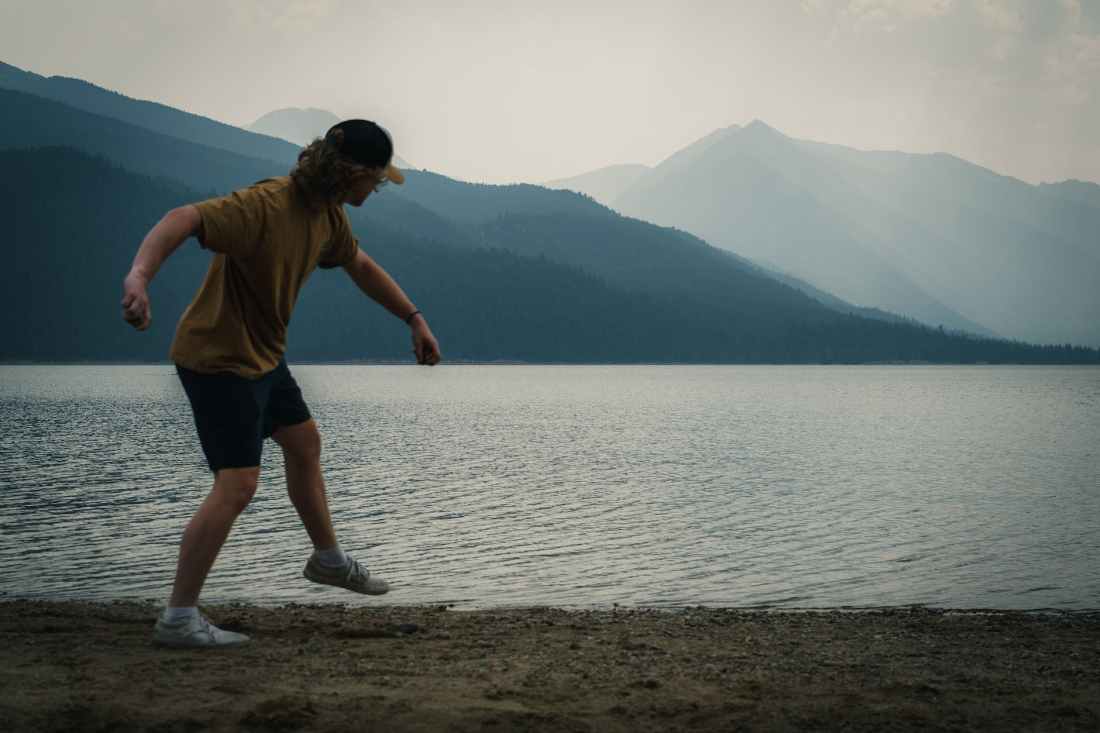
I really got into skipping stones again this summer. No, not with a sling (but I will get to that later), just with my arm. I started the summer with one big skip and then a few more hops before the stone sank into the water. After that, I focused really hard on throwing it as hard as possible and getting enough power behind it to get A LOT of skips! But every time, it would just skip higher and further, and I would still only get a few skips out of the whole thing. So then, I started thinking about the angle.

How sharp am I coming down at the water?

Where does the stone start in my hand vs. where does the stone end coming out of my hand?

Should they hit the water closer to shore or further away?

Do I throw them harder, or do I throw them flatter?

That’s when it all clicked. I started getting lower in my throwing stance. I would throw to hit the water 40ft in front of me instead of 20. I would give myself a few practice throws, really making sure I had the right throwing angle before I even let the rock leave my hand.

This relates to slinging as well.

One thing I love doing with a sling is throwing for distance. I really don’t care most of the time where the rock goes as long as it is forward and really far.

This is when angle comes into play. If I throw too high (vertical plane), I lose horizontal distance because it is taken up by vertical distance. If I throw it off from my most powerful arm angle (horizontal plane), then I lose out on distance because I couldn’t get all my power behind the throw. If I’m off by just a hair, it is 20 to 40 feet less distance.

So why is this important to you too? If you don’t start thinking about your release angle, you will always have trouble getting what you are aiming at, and you will have difficulty getting the max distance every time. Or being accurate with your sling. Also, you won’t be able to skip stones with your sling!

So first, let’s think about slinging for accuracy. There are a few things that come up when we first start with that. First, do we have the correct height of the rock? Second, how far left or right do we need to aim? And Third, how far away is our target. All these things happen in the last section of our throw, in under one second. So how are we supposed to really focus on this?

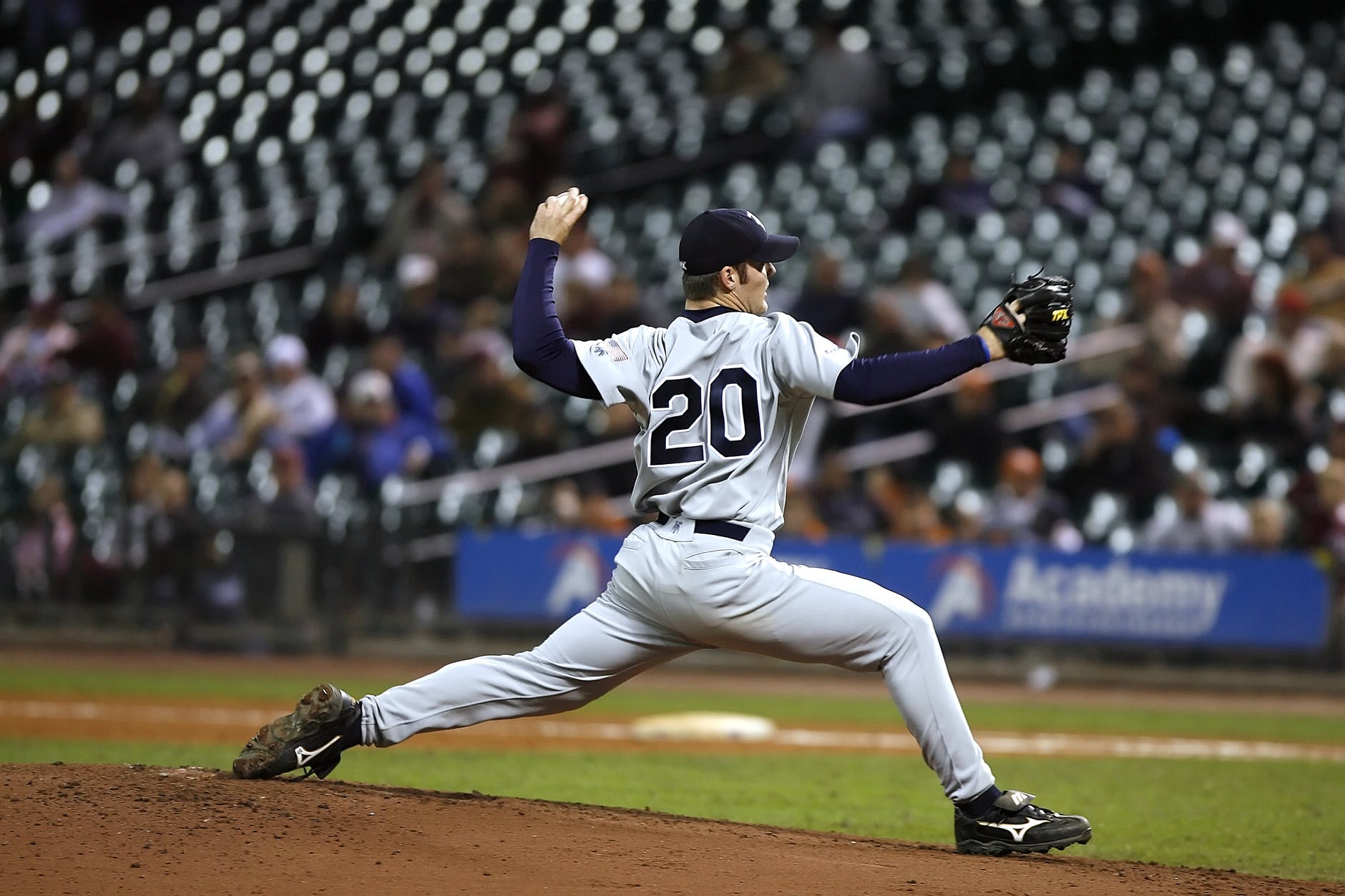
Think about it like the freeze-frame of a pitcher. Right before the ball is about to leave their hand, what do they look like?. One leg stretched way back, The other way forward, the throwing elbow bent like it might break at any moment. Yeah, that one. If everything is in line, the ball goes where they want.

Photo by Pixabay on Pexels.com

We have the same thing, just our arm also has a sting at the end of it. And that release point is what we can spend some time focusing on.

Whenever you are trying something new with the sling, always start off slow and with minimal power. You just need to make the sling move. If you are going for a distance, you want the sling to release at a 45-degree angle to the ground. That gets a nice arch on the stone, and I have found that the best result. However, if you are going for accuracy, you want it to be as close to perpendicular or zero degrees of angle to the target as possible. But in reality, it’s more like a 20-degree cause most things will be on the ground. But if it is something on a tree or a target 50 feet away, you pretty much have the rock travel parallel to the ground and hit the mark.

Now for what throw works best for what. For distance, the best throw I have found is the figure 8 throw. This throw is so valuable because it cuts out a lot of the horizontal plane, and you can focus on the vertical release point. If you mess up, you are throwing too high or right into the ground. You don’t have to worry about not getting your arm behind the sling and not getting the distance.

For accuracy, the best throw is the shepherd’s throw. I like the shepherd’s throw because it allows you to lower your arm and give a sidearm throw when trying to hit a target on the ground or in the water. You can skip a stone across the water to shoot a duck, for example. With the lateral movement of the shepherd’s throw, you have to worry less about up and down and focus more on the left and right,

The Balearic throw is somewhat of a controversial throwing style for me. It has a 2 beat windup and an overhand throw. It was historically used by the best singers in the world, but it is also a hard throw to get right. And has a lot of areas that can be messed up. SO I don’t really recommend it for someone just learning to sling. But it does give the biggest window of throws you can do. Because once you get comfortable with it, you can go high with a distance shot or low with a skip shot. All of it really works.

Hopefully, this helps you improve just a little bit in your slinging journey. And you either throw further or get that hitbox smaller on your throws.

Sling on!

How To Chose The Right Ammo For Slinging

For me, living in the New England portion of the United States, as this month rolls to an end I can only start to think about warmer weather and slinging more regularly. I can sneak a day in here and there, but the biting cold really does a number on my hands and throwing isn’t as comfortable as it usually is.

As these warmer months get closer, I want to share with you some insight on a question I get asked often.

What should I throw?

Photo by Pixabay on Pexels.com

It comes in other forms too. What should I throw: as a beginner? to get better accuracy? to get better distance? that is safe to use with the kids?

Lucky for you there are a ton of options. I’ll go over them from safest and fun to most deadly and accurate. Let’s begin.

First off is the safe fun backyard practice. Or maybe you took the kids or a youth group out for some camping and want to show them how cool slings are. The safest and most fun thing to throw are jumbo marshmallows. If they fall out mid swing no one is going to get hurt and you can eat some while people are learning. It is a win, win. But if you don’t like wasting food there are other options.

Other safe options are: Tennis Balls, Bean Bags, Hacky Sacks, Water balloons filled with flour. All these offer different benefits. Tennis balls can be thrown against a wall and come back. You can even draw different sized targets on the wall to practice accuracy. Bean bags and hacky sacks will conform nicely to the pouch and throw easily. Though if you get really good and miss the target you might lose your ammo. Lastly Balloons filled with flour. They give a great effect when you hit the target and they break! 

Next is more traditional ammo, ROCKS. These are more dangerous if misused.

They’re also dirt cheap (sorry) and easy to find out on a walk or the trails. 

Photo by Scott Webb on Pexels.com

Starting with the least consistent option we have -, driveway gravel. They work and they tend to be on the small and flat side which makes them noisy and sometimes curve in the air. But if you aren’t throwing for accuracy that is a really cool and exciting effect.

If you are out hiking you can find a bunch of stones on the trail. With a keen eye you can spot the good sling stone at a normal walking pace. Grabbing the good one as you get to your spot. But you can also grab whatever stones are available too – that also works. These tend to be better than gravel stones because of the options you will have. They tend to be bigger and denser and that is what you are looking for.

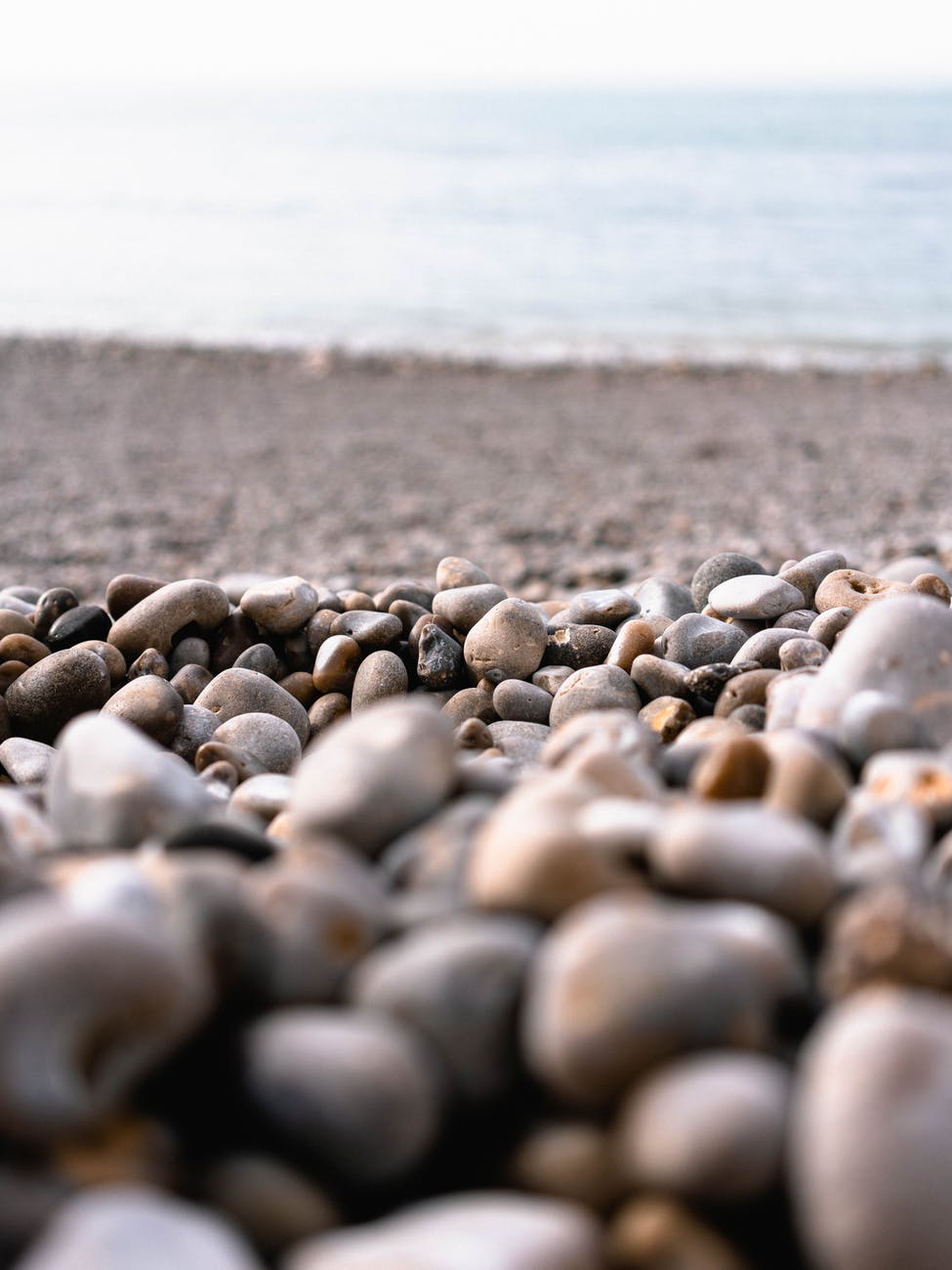
My favorite (so far) is beach and river stones. They are smooth and round, meaning they don’t rough up your sling and they are more consistent in the air. If you don’t have a river or beach nearby it is worth driving to one and grabbing a bucket or backpack of rocks to practice with. Especially if accuracy is your goal. The smoothness helps keep the rocks on track. If you want to hunt you also want a smooth stone so that it doesn’t make noise during the flight.

Something in between river stones and the next option is buying a bag of irrigation stones from a hardware store. They tend to be similar in size and they are cheap: $7 for 40 lbs. You can get a bunch of practice in with that bag. I also just learned about this, this year. I will be testing it out once it gets warmer.

Lastly, clay or concrete ammo you make yourself. This is something I will be working on learning this spring and summer. I think it will become my favorite ammo. But I can’t say so for sure until I try. This is the traditional ammo for the ancient Greek and Roman military. They even advanced to making lead, like gigantic bullets. However, that requires a lot more set up so I’m not going to suggest that for everyone. The clay or concrete ammo can be easily made and shaped to a football. This should give more distance and accuracy. It is also cheap to make and something that can be done in the winter months in the shed to be used once the warmer months come around.

I learned how to sling with driveway gravel. Over the years I have tried out a bunch of different stones and here are some qualities you want to look for when selecting a stone:

Round. If the stone is round it will go straight. If the stone is flat it has a tendency to curve.

Egg Sized. This works best for me and the slings I make. Much bigger and the weight can become an issue. It becomes hard to hold the sling and get it up to speed. Much smaller and the rocks don’t go anywhere.

Dense. Having all the mass tight together give a smoother and farther throw. If two rocks are the same size the denser one will go further. It just transfers the energy better.

Photo by Ihsan Aditya on Pexels.com

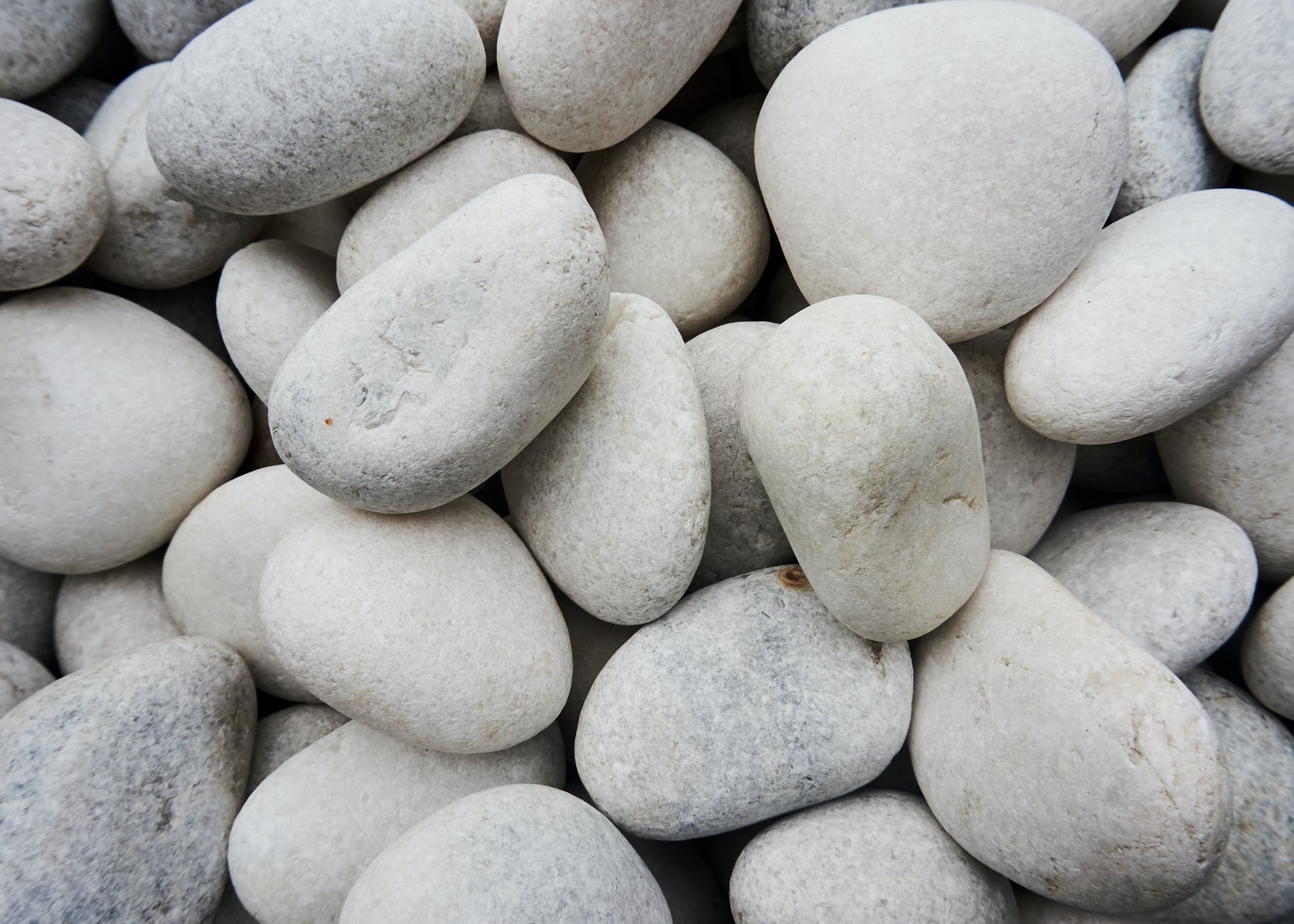
I love when I find egg sized quartz stones! They are naturally round and very dense. I have thrown these the furthest out of all the stones I have gotten to throw yet. So, keep an eye out for them. 

Let me know what you think and what you have tried. 

Till next time,

Sling on

5 Things Every Intermediate Slinger Needs to Stop Right Now

At around 2007 I was finally getting pretty good at slinging. I was starting to show my friends and teach other people. You could say I was an advanced intermediate slinger. I hadn’t tried to improve on my accuracy since I started. Throwing far was significantly more fun. But as I taught more people and introduced slings to others, I started to see a pattern as they got better. I also saw these things in my own journey. Here is what you can do to not get stuck in the middle for too long.

Getting mad that you don’t see big jumps of improvement anymore

After starting anything, you will see big jumps in improvement and get hit with a lot of “ah ha” moments. But once you pass that stage you will be seeing more plateaus. You will be refining smaller techniques. Getting mad that you aren’t hitting things isn’t going to help you (but reading my last article will). You will see these as frustrations, maybe failures. But everyone goes through this phase. Remembering that and putting in your time is all that is needed. Getting mad just slows down your progression.

Doing the same thing that got you here

Slinging is just like working out. If you do the same thing long enough your body will acclimate. This is your new normal. You won’t see improvements. So, you will have to change up your practice routine a little. Instead of going out and throwing for accuracy for 20 mins then giving yourself 5 mins to really let loose and go for distance. Try going for 20 mins of distance letting your arm tire out and then see how accurate you can be. Or change up your distance and try for 30 ft, then 50, then 75, then 100. Who knows, you might surprise yourself with what you can do.

Using the same sling you started with

Now if you have had the same sling for years and it fits your hand perfectly, I can’t blame you for not wanting to get a new one. But unfortunately, at some point it is going to wear out and break. You can do a handful of things to slow this down. However, getting a new sling is a really good option. Once you get a new sling it will (once again) need time to break in. Get fitted to your hand and throwing style. I always have a few slings that are broken in and a few more that are breaking in (I mean, I sell slings and have been making them for almost 20 years. If I didn’t have slings lying around what kind of sling maker would I be?). At this stage you can always have a second sling that is a different style. Or try out a few different styles to see what you like best. Do you like Hemp woven slings? Para cord sling? Round braids? Flat braids? There are quite a few options out there. I make some slings that work way better for hunting. There are some that make a sweet “CRACK” when the rock is released and are more for show. Each sling has its purpose and you can start filling out your collection at this point.

Still throwing by yourself

I recommend beginners throw by themselves because of the sporadic directions that the rocks can go when first starting out. But, some of my best slinging memories have been from when me and my buddy from college were throwing. Or and when showing kids at summer camp. Sometimes you just need to start bringing people around. If you don’t feel safe just throw marshmallows. Jumbo marshmallows are safe and fun. You could even do a game of dodge ball with them. Or use empty plastic eggs. This will start to bring more people into the activity and share in the joy and fun that slinging is.

Adding a bunch of new throwing style to your bag of tricks.

As a beginner you should only have 1 throw you work on but as an intermediate you should really only add 2 more. I would recommend the shepherds throw, Balearic throw, and the figure 8 throw. With these styles you will get and accurate throw, a versatile throw, and a long-distance throw. All are also relatively easy to learn and safe if you mess up. If you put the time in with these throws it will pay off down the road. These are my go-to throws even to this day.

These are the important things for Intermediate slingers to know. Don’t get mad at yourself your still basically a new slinger. Switch up your practice routine to help prevent plateauing. Get a new sling and start breaking it in. Get some friends or family to join in the fun. And add 2 more throws to your arsenal. Once you do these things you will be on your way to becoming an expert slinger in no time.

Thanks for reading,

Sling on