

I really got into skipping stones again this summer. No, not with a sling (but I will get to that later), just with my arm. I started the summer with one big skip and then a few more hops before the stone sank into the water. After that, I focused really hard on throwing it as hard as possible and getting enough power behind it to get A LOT of skips! But every time, it would just skip higher and further, and I would still only get a few skips out of the whole thing. So then, I started thinking about the angle.
How sharp am I coming down at the water?
Where does the stone start in my hand vs. where does the stone end coming out of my hand?
Should they hit the water closer to shore or further away?
Do I throw them harder, or do I throw them flatter?
That’s when it all clicked. I started getting lower in my throwing stance. I would throw to hit the water 40ft in front of me instead of 20. I would give myself a few practice throws, really making sure I had the right throwing angle before I even let the rock leave my hand.
This relates to slinging as well.
One thing I love doing with a sling is throwing for distance. I really don’t care most of the time where the rock goes as long as it is forward and really far.
This is when angle comes into play. If I throw too high (vertical plane), I lose horizontal distance because it is taken up by vertical distance. If I throw it off from my most powerful arm angle (horizontal plane), then I lose out on distance because I couldn’t get all my power behind the throw. If I’m off by just a hair, it is 20 to 40 feet less distance.
So why is this important to you too? If you don’t start thinking about your release angle, you will always have trouble getting what you are aiming at, and you will have difficulty getting the max distance every time. Or being accurate with your sling. Also, you won’t be able to skip stones with your sling!
So first, let’s think about slinging for accuracy. There are a few things that come up when we first start with that. First, do we have the correct height of the rock? Second, how far left or right do we need to aim? And Third, how far away is our target. All these things happen in the last section of our throw, in under one second. So how are we supposed to really focus on this?
Think about it like the freeze-frame of a pitcher. Right before the ball is about to leave their hand, what do they look like?. One leg stretched way back, The other way forward, the throwing elbow bent like it might break at any moment. Yeah, that one. If everything is in line, the ball goes where they want.
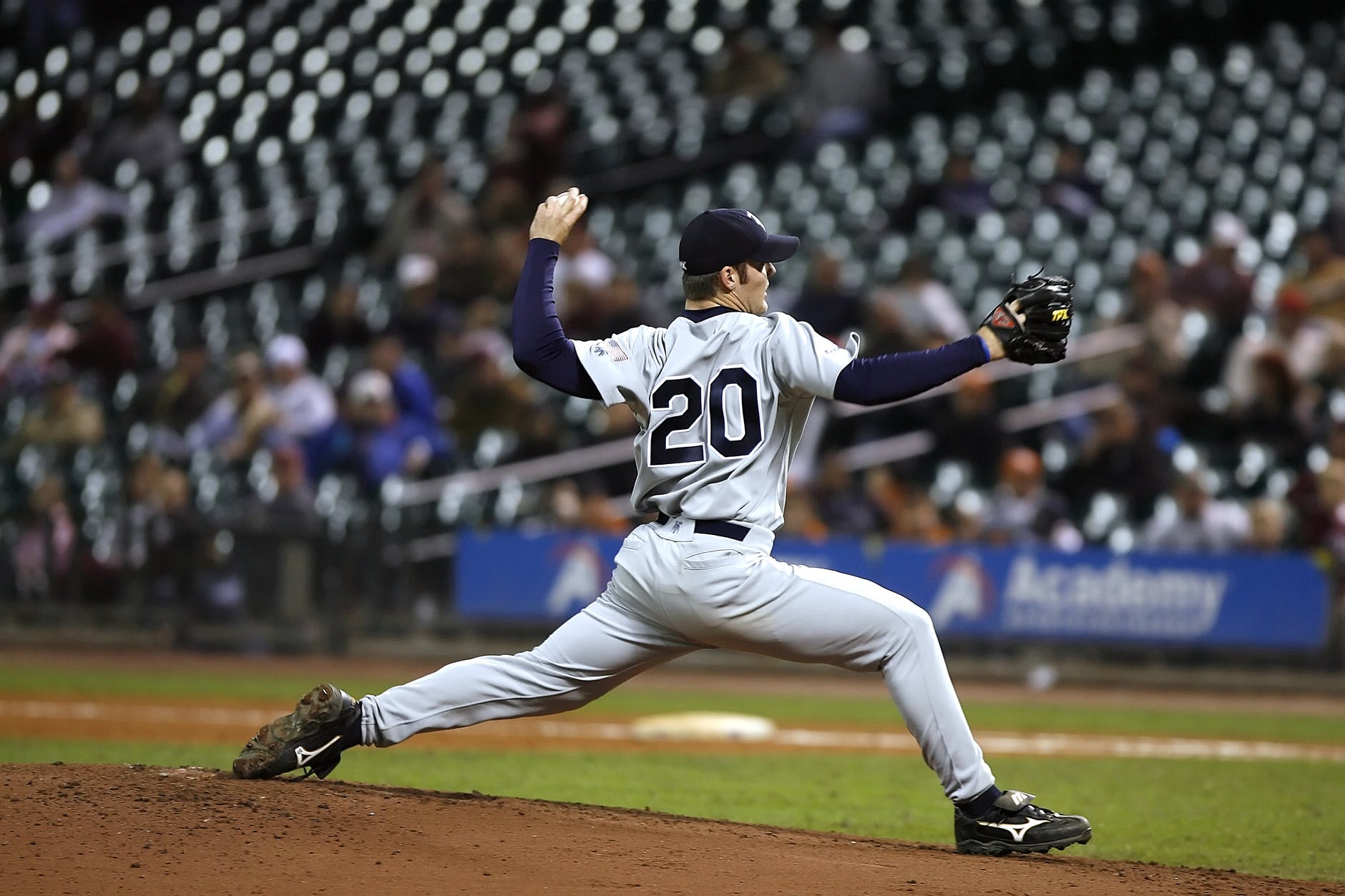
We have the same thing, just our arm also has a sting at the end of it. And that release point is what we can spend some time focusing on.
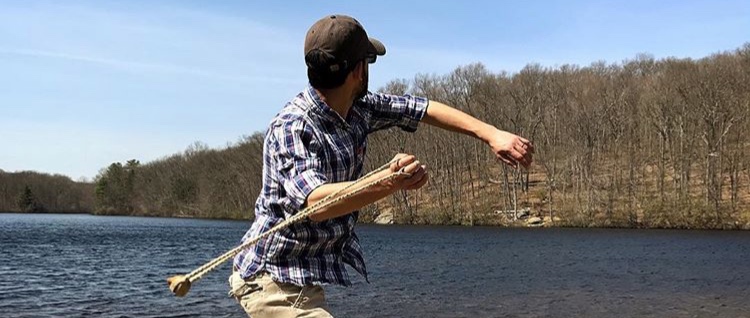
Whenever you are trying something new with the sling, always start off slow and with minimal power. You just need to make the sling move. If you are going for a distance, you want the sling to release at a 45-degree angle to the ground. That gets a nice arch on the stone, and I have found that the best result. However, if you are going for accuracy, you want it to be as close to perpendicular or zero degrees of angle to the target as possible. But in reality, it’s more like a 20-degree cause most things will be on the ground. But if it is something on a tree or a target 50 feet away, you pretty much have the rock travel parallel to the ground and hit the mark.
Now for what throw works best for what. For distance, the best throw I have found is the figure 8 throw. This throw is so valuable because it cuts out a lot of the horizontal plane, and you can focus on the vertical release point. If you mess up, you are throwing too high or right into the ground. You don’t have to worry about not getting your arm behind the sling and not getting the distance.
For accuracy, the best throw is the shepherd’s throw. I like the shepherd’s throw because it allows you to lower your arm and give a sidearm throw when trying to hit a target on the ground or in the water. You can skip a stone across the water to shoot a duck, for example. With the lateral movement of the shepherd’s throw, you have to worry less about up and down and focus more on the left and right,
The Balearic throw is somewhat of a controversial throwing style for me. It has a 2 beat windup and an overhand throw. It was historically used by the best singers in the world, but it is also a hard throw to get right. And has a lot of areas that can be messed up. SO I don’t really recommend it for someone just learning to sling. But it does give the biggest window of throws you can do. Because once you get comfortable with it, you can go high with a distance shot or low with a skip shot. All of it really works.
Hopefully, this helps you improve just a little bit in your slinging journey. And you either throw further or get that hitbox smaller on your throws.
Sling on!

 The Hilltop Hurler